2016/02/24

Guide to Picking The Right Pair of Soccer Cleats

  • HG – Hard ground is the ideal option for players who play on dry surfaces, or surfaces where grass has been worn away and the ground is barer. This configuration features a low profile with many conical studs to help keep you balanced. Can also be used effectively on FG surfaces.

  • SG – Soft Ground boots should only be worn when the surface is soft enough for the studs to penetrate the surface. This is the configuration of choice for players in areas where it rains very frequently and they usually feature replaceable studs.

  • AG – Artificial Ground is the newest type of configuration that companies are trying to incorporate into the market. AG is specific to newer turf surfaces and the top brands have proven extremely effective in producing excellent traction. Not to be used on FG.
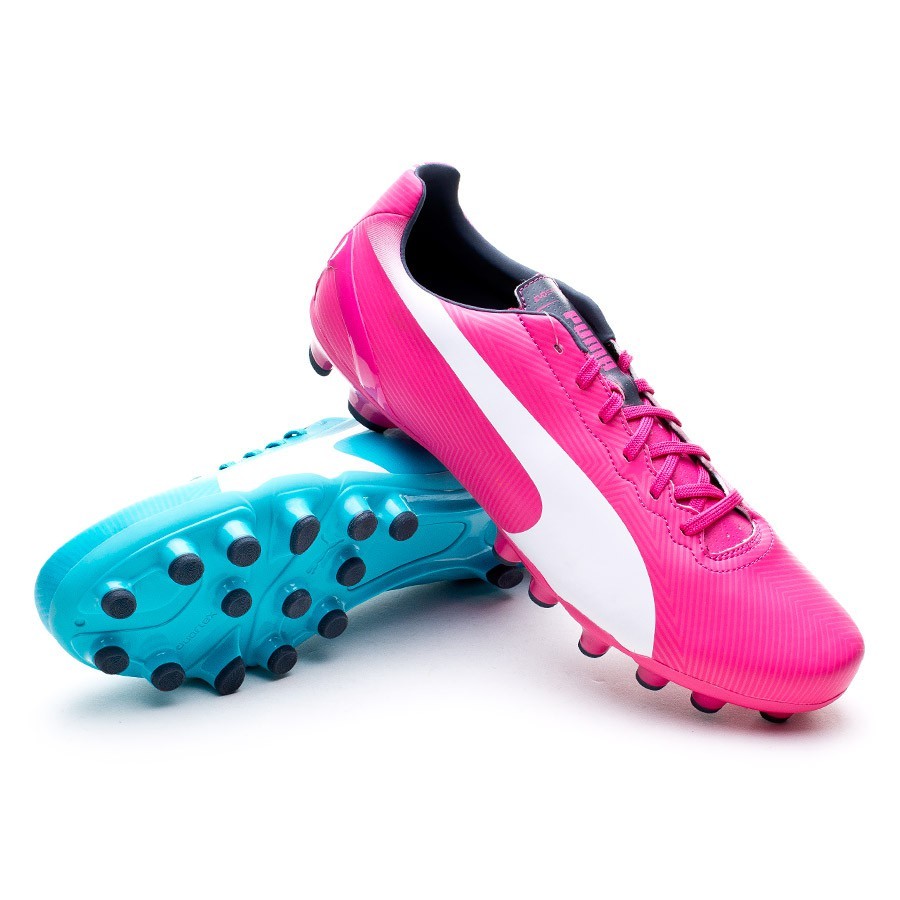
  • FG – Firm Ground boots are best suited to natural grass surfaces where it doesn’t rain regularly. With so many locations taking to artificial grass, companies are adjusting their designs and FG is now pretty much accepted as an option for Artificial pitches.

  • AT – Turf shoes have long been the preferred choice for players on artificial surfaces. They feature a very low profile with a concentrated number of small conical rubber studs. They offer an older style performance option for players who play on any sort of turf surface.

  • IN – Indoor shoes are designed for any sort of court soccer play. If the surface is flat and “solid as a rock” then indoor is probably the right choice.


http://www.soccercleats101.com/2013/07/04/complete-guide-to-picking-the-right-pair-of-soccer-cleats/


What basic gear is needed for soccer?

One of the great things about soccer is that you don't need a lot of gear to play. Soccer only requires a few basic pieces of equipment, including a ball, clothing, shin guards and footwear. With these few basic pieces, you can play a pick-up game or competitive soccer.

Ball

One of the most basic -- and most important -- pieces of soccer equipment is the ball. FIFA specifies that soccer balls must be spherical, with circumference between 27 and 28 inches. It also specifies that the ball should weigh 14 to 16 ounces at the beginning of the game and have air pressure of 8.5 pounds per square inch.


Jersey and Shorts

Players must wear a jersey and shorts. They are permitted to
wear undershirts, but the sleeve of the undershirt must match the color of the jersey's sleeve. Players can also wear undershorts, and they must be the same color as the shorts. Players must keep their jerseys on during the game. 

Shin Guards and Socks
FIFA requires all players to wear shin guards. They must be made of rubber, plastic or a similar material, and provide reasonable protection to the player. The referee will check players' shin guards before they enter the field to ensure that they provide sufficient protection. Soccer players must wear socks that cover the shin guards entirely.

Footwear
Soccer players must wear footwear. This can simply be a pair of running shoes, but most players prefer specialized soccer shoes. 
http://healthyliving.azcentral.com/basic-gear-needed-soccer-4710.html

Fair Play Guidelines

Principles of Fair Play

  1. Respect the rules
  2. Respect the officials and their decisions
  3. Respect your opponent
  4. Give everyone an equal chance to participate
  5. Maintain your self-control at all times
Fair Play Code For Players
  1. I will participate because I want to, not just because my parents or coaches want me to.
  2. I will play by the rules, and in the spirit of the game.
  3. I will control my temper - fighting and “mouthing off” can spoil the activity for everybody. No swearing!
  4. I will respect my team mates and opponents. No put downs.
  5. I will do my best to be a true team player.
  6. I will remember that winning isn’t everything - that having fun, improving skills, making friends and doing my best are also important.
  7. I will acknowledge all good plays/performances - those of my team and of my opponents.
  8. I will remember that coaches and officials are there to help me. I will accept their decisions and show them respect.
Fair Play Code For Parents
  1. I will not force my child to participate in sports.
  2. I will remember that my child plays sport for his or her enjoyment, not for mine.
  3. I will encourage my child to play by the rules and to resolve conflicts without resorting to hostility or violence.
  4. I will teach my child that doing one’s best is as important as winning, so that my child will never feel defeated by the outcome of a game/event.
  5. I will make my child feel like a winner every time by offering praise for competing fairly and trying hard.
  6. I will never ridicule or yell at my child for making a mistake or losing a competition.
  7. I will remember that children learn best by example. I will applaud good plays/performances by both my child’s team and their opponents.
  8. I will never question the officials’ judgment or honesty in public.
  9. I will support all efforts to remove verbal and physical abuse from children’s sporting activities.
  10. I will respect and show appreciation for the volunteer coaches who give their time to provide sport activities for my child.

http://armstrongyouthsoccer.weebly.com/fair-play-guidelines.html

How to tie your shoes


2016/02/23

8 Reasons to play soccer

1. Simple

Soccer requires one ball and a space to play. The space doesn’t have to be large. Grass and cleats aren’t required.
I’ve played soccer everywhere you can imagine. I’ve played on the beach, in the parking lot outside my apartment, and in my parent’s basement.
Being able to play anywhere means you can have fun, show off, and improve your skill anytime.

2. Something For Everyone

Anyone that can kick a ball can play soccer. It’s a blast for beginners and experts alike.
Beginners love soccer because it’s quick to pick up and play. There is inherent joy in kicking a ball around (even if you’re not very good).
Soccer can also be complex. If you want to play competitively, you must hone many skills, learn strategies, and become fit. Experts and beginners can always improve, and with each improvement players enjoy playing more and more.

3. Work Ethic

You need good work ethic to become successful at soccer. You must train hard to develop skills and fitness.
Coaches and teammates push players to develop better work ethic, and when players work hard and succeed they build confidence (which translates to all aspects of life).

4. Leadership

Leaders often form on a soccer pitch.
Players learn that their teammates need someone to guide them in the right direction.
Through trial and error, players learn how to lead effectively.

5. Sportsmanship

Through good examples by coaches and teammates, players learn what it takes to play a sport with class.
Bad sportsmanship is punished, and most players discover the value of great sportsmanship.

6. Perseverance

At first, players get frustrated when they fail. They eventually realize that through perseverance, their ability as a player will improve.
Players may have to overcome injuries, cold streaks, bad coaches, and more. All these things teach perseverance.

7. Fitness

Players become fit and create positive fitness habits that can last a lifetime. They learn what it takes to be in shape and work hard to improve their fitness.
Soccer players tend to become lean and muscular. They develop endurance from constant running, and muscles from work-outs.
Players tend to think more about nutrition and drug use. They want to play to their full potential so they avoid drugs and unhealthy food.
When players are playing they are not watching TV, playing video games, or texting. They are getting a full work-out that teaches them healthy habits.

8. Social

Soccer players become friends with their teammates.
Teammates share a common bond that promotes a sense of unity and fosters friendships.
Some teammates even become lifelong friends.


http://www.completesoccerguide.com/soccer-benefits/

Wall pass and long pass


Match


Match: El partido

¡Gol!
goal!
Marcar to score
La/el juez de línea linesman/woman
El balón, la pelota ball
El palo the post
La bandera flag
Una patada kick
La falta foul
El saque de centro kick-off
El saque de esquina corner kick
El saque de falta free-kick
El saque de banda throw-in
El penalti penalty
Fuera de juego outside
El árbitro the referee
La tarjeta roja red card
La tarjeta amarilla yellow card

La lesión injury
El cambio substitution